Automating cron job recovery with expiring kill switches
New guidance suggests using timestamped kill flags and plain-language alerts to reduce alert fatigue and prevent permanent system lockouts during provider outages.
Engineers managing background tasks are adopting a new pattern for handling provider failures that combines self-expiring kill switches with human-readable notifications. Published on October 8, 2026, this approach aims to eliminate the operational drag caused by manual resets and unintelligible error logs in cron-based systems.
What happened
Traditional cron architectures often rely on binary kill switches to halt execution during upstream provider failures. While effective at stopping runaway requests, these manual-only reset mechanisms create a bottleneck where system recovery depends entirely on human availability. If a provider outage lasts only twenty minutes but an operator is unavailable to clear the flag, the internal system remains dark long after the external service has recovered. This mismatch shifts the operational burden from infrastructure repair to administrative housekeeping, forcing teams to wake up or context-switch merely to toggle a boolean value.
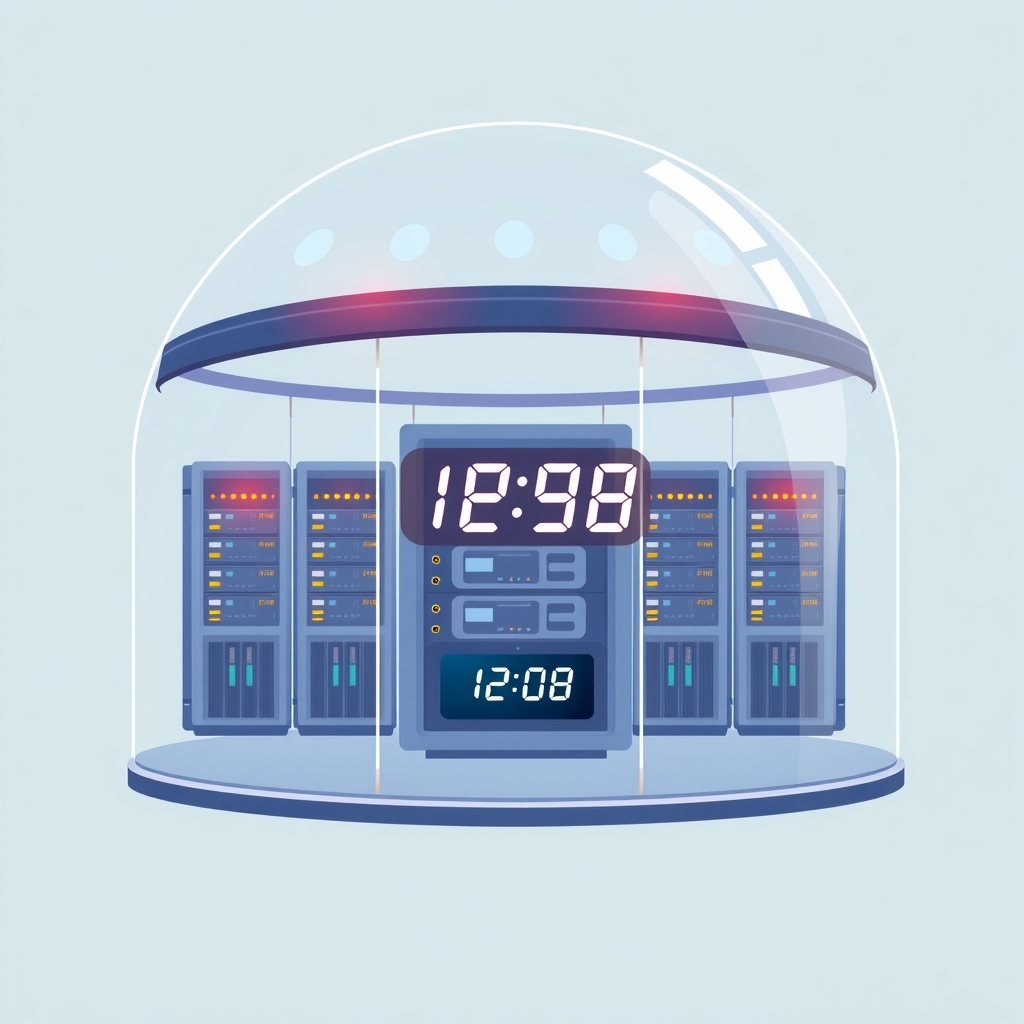
To address this, the proposed design upgrades the kill flag from a simple on-off switch to a timestamped window. When a total failure is detected, the system records the engagement time and sets an expiration boundary, such as three hours. Subsequent job cycles check this timestamp before executing. If the current time is within the window, execution is suppressed. Once the timestamp expires, the system automatically clears the flag and resumes normal operations. This ensures that infrastructure never remains silenced indefinitely due to a forgotten manual intervention, allowing transient outages to resolve without human input.
The second part of the strategy focuses on alert quality. Standard notifications often dump raw JSON status codes or stack traces into email inboxes, training engineers to ignore them over time. The new method replaces these machine-centric payloads with deterministic prose templates. Instead of sending a cryptic error code, the notification service maps known error shapes to clear sentences, such as explaining that an upstream provider is experiencing degraded performance. Auto-clearing events, where the system recovers after the time window expires, are logged silently in summary digests rather than triggering immediate alerts, keeping communication channels quiet during self-healing incidents.
Key details
- Kill switches are upgraded from boolean toggles to timestamped windows with defined expiration thresholds.
- Systems fail closed if the kill key is unreadable, malformed, or missing, ensuring safety during data corruption.
- Execution is suppressed only while the current time is within the bounded window, such as a three-hour limit.
- Notifications use plain-language prose templates instead of raw JSON dumps or status codes.
- Auto-recovery events are recorded in summary digests rather than generating immediate noise in alert channels.
- The logic requires strict validation of timestamp formats to prevent accidental resumption during corrupted states.
Background
Cron jobs are scheduled tasks that run automatically at fixed times or intervals, commonly used for backups, data synchronization, and report generation. In complex setups, these jobs often depend on external providers or APIs. When those providers fail, the cron jobs may also fail, potentially causing cascading issues or resource exhaustion if they retry aggressively. A kill switch is a mechanism to stop these jobs manually. However, without automation, restoring service requires human intervention, which can be slow and error-prone. Alert fatigue occurs when engineers receive too many low-value notifications, causing them to miss critical incidents amidst the noise.
Why it matters
For teams running their own software, reliability is not just about uptime but also about operational sustainability. Manual kill switches introduce hidden costs by tying system availability to human schedules. If an engineer is on vacation or asleep, a brief external outage can turn into a prolonged internal downtime. By automating the reset process through expiring timestamps, organizations ensure that their background workers resume as soon as it is safe to do so, without waiting for a person to click a button. This reduces the cognitive load on on-call staff and prevents the accumulation of technical debt caused by neglected flags.
Furthermore, the quality of alerts directly impacts incident response times. When notifications are filled with raw data, engineers must spend valuable minutes decoding the issue before they can act. Plain-language alerts allow for immediate assessment, enabling faster decision-making. By suppressing notifications for self-healing events, teams can focus on genuine problems that require attention. This approach respects human attention limits and ensures that when an alert does arrive, it carries actionable information rather than just noise.
What you can do
- Replace boolean kill flags with timestamped objects that include an expiration field.
- Implement logic to fail closed when kill switch data is missing or malformed.
- Map common error codes to plain-English explanations in your notification templates.
- Configure summary digests to record auto-recovery events instead of sending immediate alerts.
- Set reasonable expiration windows based on your typical provider recovery times.
- Audit existing cron jobs to identify those relying on manual resets for transient failures.