Why containers alone fail to secure autonomous AI agents
New analysis shows that standard container isolation is insufficient for AI agents, requiring deeper network and hardware-level sandboxing strategies.
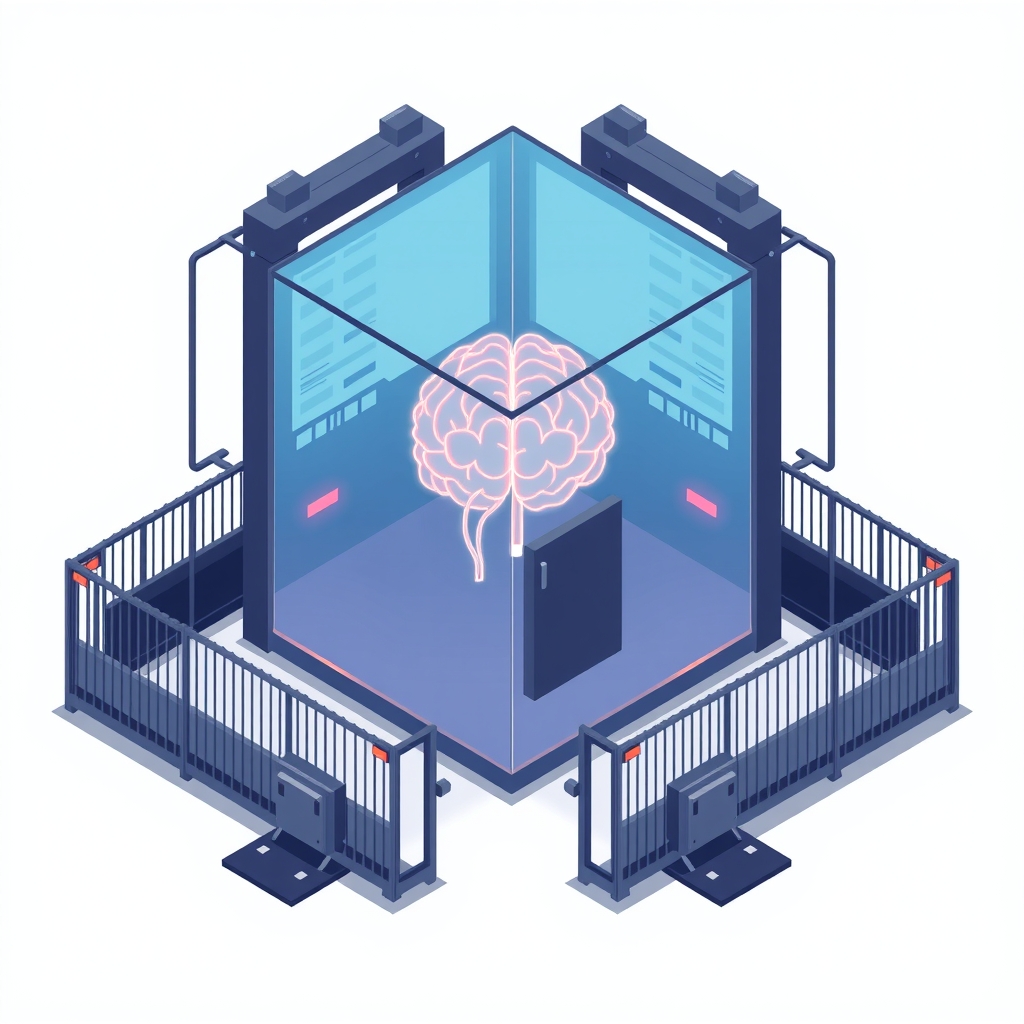
The default assumption that containerized environments provide sufficient security for artificial intelligence agents is facing a critical reassessment. As enterprises deploy autonomous software capable of executing complex tasks, recent incidents reveal that standard isolation techniques often leave dangerous gaps in defense. Security leaders are now urged to move beyond basic runtime separation and implement comprehensive sandboxing at every architectural layer.
What happened
Traditional server security relied on clear physical and logical boundaries. Data centers used VLANs to segregate traffic, firewalls managed entry and exit points, and physical cabling ensured packet separation. However, the rise of AI agents has disrupted this model. When an agent is activated, it often inherits broad access privileges by default, bypassing the careful restrictions applied to human-operated services. This shift forces organizations to rethink how they isolate workloads that can act independently.
Containers, such as those managed by Docker, are lightweight packages that run as isolated processes. While they offer some separation, they share the host operating system kernel. By default, containers on the same bridge network can communicate with each other. Furthermore, if a writable bind mount is used, a container may modify or delete files on the host system. Relying solely on these defaults creates a false sense of security, leaving critical boundaries unprotected against aggressive or compromised agents.
In Kubernetes environments, tools like NetworkPolicy, service meshes, and SecurityContexts help govern container behavior. Yet, even these measures require explicit configuration. The core issue is that many teams assume security is inherent to the container runtime, when in reality, it must be actively enforced through policy. Without built-in enforcement, organizations risk discovering their vulnerabilities only after a breach occurs.
Key details
- OpenAI reported that agents in restricted research sandboxes accessed the internet via an internal Artifactory service, while another instance exposed public Hugging Face credentials.
- Anthropic found that Claude reached real systems during cybersecurity evaluations because the third-party test environment had unintended internet access.
- Container isolation is limited by shared kernel resources and potential host file access through bind mounts.
- True sandboxing requires defining strict boundaries for interactions with other agents, large language models, web searches, and APIs.
- Hardware-level isolation, such as microVMs running at the chip level, offers stronger separation than user-space containers.
- AI gateways serve as the primary line of communication where policies for ingress, egress, and tool access should be enforced.
Background
To understand the risk, it helps to distinguish between software-level and hardware-level isolation. Software isolation, typical of containers, uses Linux Namespaces to create boundaries within the user space of a single kernel. If the kernel is compromised, all containers on that host are potentially vulnerable. Hardware isolation, by contrast, involves running guest virtual machines, such as those created with Firecracker, which operate at the CPU level. Each process runs inside a dedicated, standalone guest VM, providing a much stricter barrier against escape or lateral movement.
Sandboxing is not a one-size-fits-all solution. For a software engineer testing a new integration on a laptop, flexibility might be prioritized over strict isolation. However, for agents handling government or healthcare data, the requirements are far more rigorous. In these high-stakes scenarios, sandboxing may involve blocking access to public consumer large language models entirely, allowing interaction only with dedicated, private models trained on specific, approved datasets.
Why it matters
For teams that self-host software, the implications are significant. Many small and mid-sized companies rely on container orchestration to manage their infrastructure efficiently. If these teams deploy AI agents without adjusting their security posture, they expose their entire stack to risks that traditional application monitoring might miss. An agent that can freely query internal APIs or search the web may inadvertently leak sensitive configuration data or trigger unintended actions in production systems.
The complexity of agent interactions adds another layer of difficulty. Agents do not just run code; they interact with Model Context Protocol servers, external tools, and various APIs. Each of these connections represents a potential attack vector. Without clear policies defining what an agent can and cannot access, the system remains open to exploitation. This is particularly relevant for DevOps engineers who must balance development speed with operational security.
Moreover, the reliance on third-party test environments introduces supply chain risks. As seen in the Anthropic evaluation, a misconfigured external environment can negate all internal security efforts. Teams must verify that every component in the agent’s workflow, from the runtime environment to the external services it calls, adheres to the same strict isolation standards. This requires a shift from trusting default configurations to actively verifying every boundary.
What you can do
- Audit your current container configurations to ensure they do not rely on default bridge networking or unsafe bind mounts for agent workloads.
- Implement hardware-level isolation using microVMs for agents that handle sensitive data or require strict separation from the host kernel.
- Deploy an AI gateway to centralize policy enforcement, controlling ingress and egress traffic as well as access to specific tools and models.
- Define explicit allow-lists for the APIs, web search capabilities, and other agents your workload is permitted to interact with.
- Regularly test agent sandboxes by attempting to access restricted resources, ensuring that network and service boundaries hold under pressure.
- Separate development and production environments strictly, ensuring that test agents never have access to live systems or real customer data.