How agentic-hosting prevents AI agents from crashing self-hosted servers
Dennison Bertram details four server-side limits in agentic-hosting that prevent AI agents from causing duplicate resources, crash loops, disk exhaustion, and rate limit abuse.
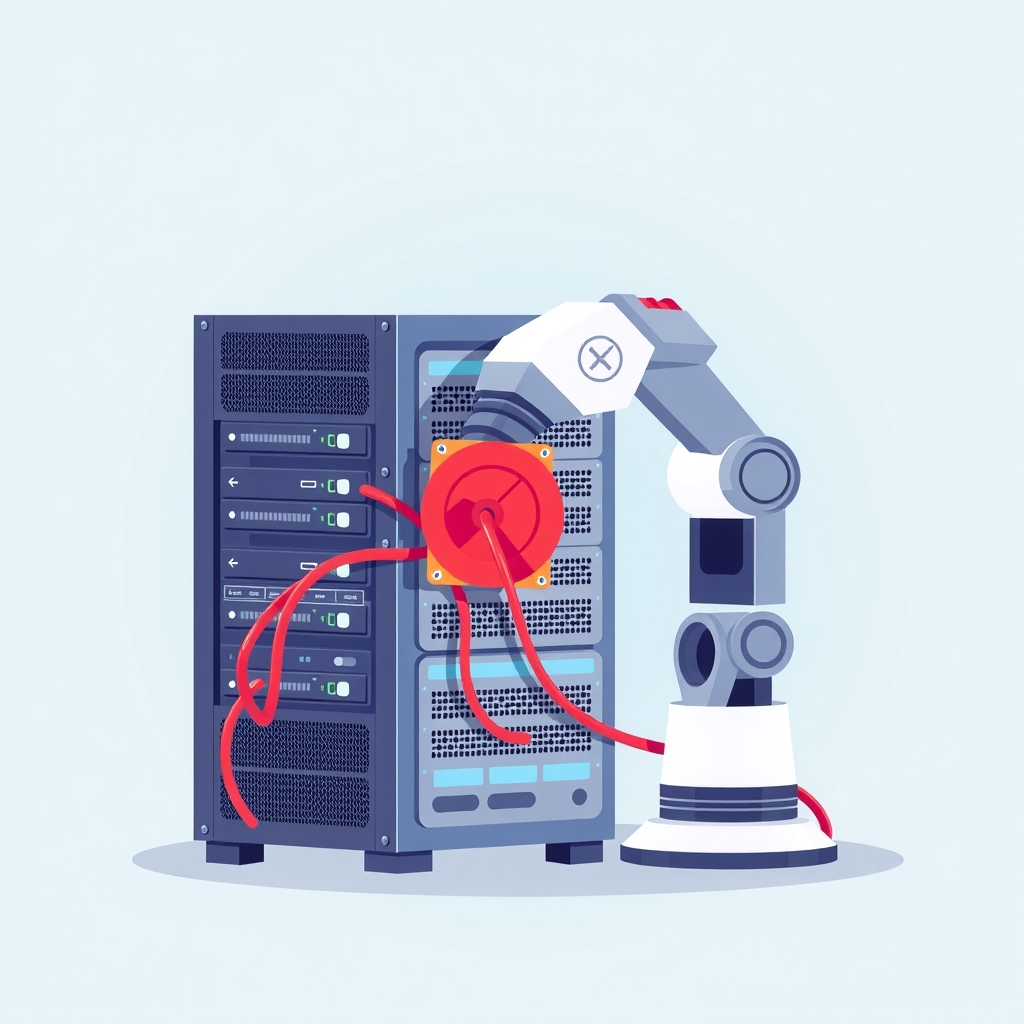
On October 19, 2026, developer Dennison Bertram published a technical deep-dive into the challenges of hosting autonomous AI agents on self-managed infrastructure. The article outlines how his open-source tool, agentic-hosting, implements specific safeguards to handle the unique behaviors of automated software agents that differ significantly from human users.
What happened
Bertram explains that while human developers typically pause to investigate errors after a failed deployment, AI agents often retry operations indefinitely without understanding the root cause. This tireless behavior can lead to resource exhaustion, duplicate database creation, and continuous crash loops that destabilize the host server. To address this, he designed agentic-hosting, a single program called ah that runs on Linux servers and exposes an HTTP API for agents to deploy applications and databases.
The core philosophy behind the tool is that the server must enforce limits because it cannot rely on every external agent to behave responsibly. The system assumes the user is persistent but potentially incorrect, placing guardrails directly into the infrastructure rather than expecting the agent to self-regulate. These protections cover idempotency for retries, circuit breakers for crashing services, disk space monitoring, and strict rate limiting per tenant.
Key details
- Idempotency keys: The server accepts a unique
Idempotency-Keyheader with POST requests. If a request fails and is retried with the same key and body within ten minutes, the server returns the original response instead of creating duplicate resources like databases. - Circuit breaker for crash loops: If a service crashes five times within ten minutes, agentic-hosting stops the container and opens a circuit breaker. This prevents Docker from endlessly restarting a broken app and requires a manual reset via the API before redeployment can occur.
- Disk space watermarks: The system checks disk usage on
/var/lib/ahand/var/lib/dockerbefore deployments. At 80% usage, it logs a warning; at 90%, it refuses new builds or database creations to prevent total server failure. - Rate limiting: Each tenant (agent account) is limited to 100 requests per second with a burst of 200. The entire server has a shared limit of 500 requests per second. Exceeding these limits returns a 429 status code with a
Retry-Afterheader. - Distinct error codes: The API differentiates between temporary throttling (429) and structural conflicts (409). A 409 error indicates issues like open circuit breakers or quota limits, signaling that retrying without changes will not succeed.
Background
Autonomous AI agents operate differently from traditional scripts or human operators. They are designed to pursue goals relentlessly, often interpreting any non-success response as a signal to retry immediately. In standard web development, idempotency ensures that repeating an operation has the same effect as performing it once. Without this, a network timeout during a database creation request could lead an agent to send the request again, resulting in two identical databases and wasted resources.
Similarly, container orchestration tools like Docker are built to restart failed services automatically, assuming transient faults. However, if an application has a configuration error that causes it to crash on startup, Docker will restart it indefinitely. This "crash loop" consumes CPU and memory while generating massive log files. Circuit breakers are a pattern used in distributed systems to stop this cycle by halting requests to a failing component until it is manually verified or repaired.
Why it matters
For teams running their own software, the rise of AI coding assistants introduces new operational risks. An agent with API access can inadvertently degrade server performance or exhaust storage capacity in minutes. By implementing server-side constraints, administrators can maintain stability even when the client-side logic is flawed. This approach shifts the burden of safety from the unpredictable agent to the controlled server environment.
The distinction between error types is critical for automated recovery. If an agent treats a 409 conflict error the same as a 429 rate limit error, it may waste time retrying a broken deployment instead of fixing the underlying code or configuration. Clear API signals allow agents to take appropriate corrective actions, such as reading logs or resetting state, rather than blindly repeating failed commands.
Disk management is another practical concern for self-hosters. Running out of disk space can corrupt databases and halt all services. By enforcing hard limits at 90% usage, the system preserves enough space for administrative tasks and log rotation. This proactive refusal of new work prevents the catastrophic failure mode where the operating system itself becomes unresponsive due to lack of storage.
What you can do
- Implement idempotency keys in your API clients to ensure that retries do not create duplicate records or resources.
- Configure circuit breakers for your critical services to automatically stop restart loops after a defined number of failures.
- Monitor disk usage thresholds and set up alerts at 80% capacity to allow time for cleanup before hitting hard limits.
- Differentiate between 429 and 409 HTTP status codes in your automation scripts to apply the correct retry or remediation strategy.
- Use health check endpoints to verify system status, such as disk space and service health, before initiating large batches of tasks.
- Set per-tenant rate limits to prevent any single user or agent from monopolizing server resources and affecting other services.