PHP2Shell vulnerabilities force global shutdowns as AI accelerates patch cycles
Critical remote code execution flaws in PHP runtime triggered widespread service outages across Europe, highlighting the risks of unsupported versions and AI-driven vulnerability discovery.
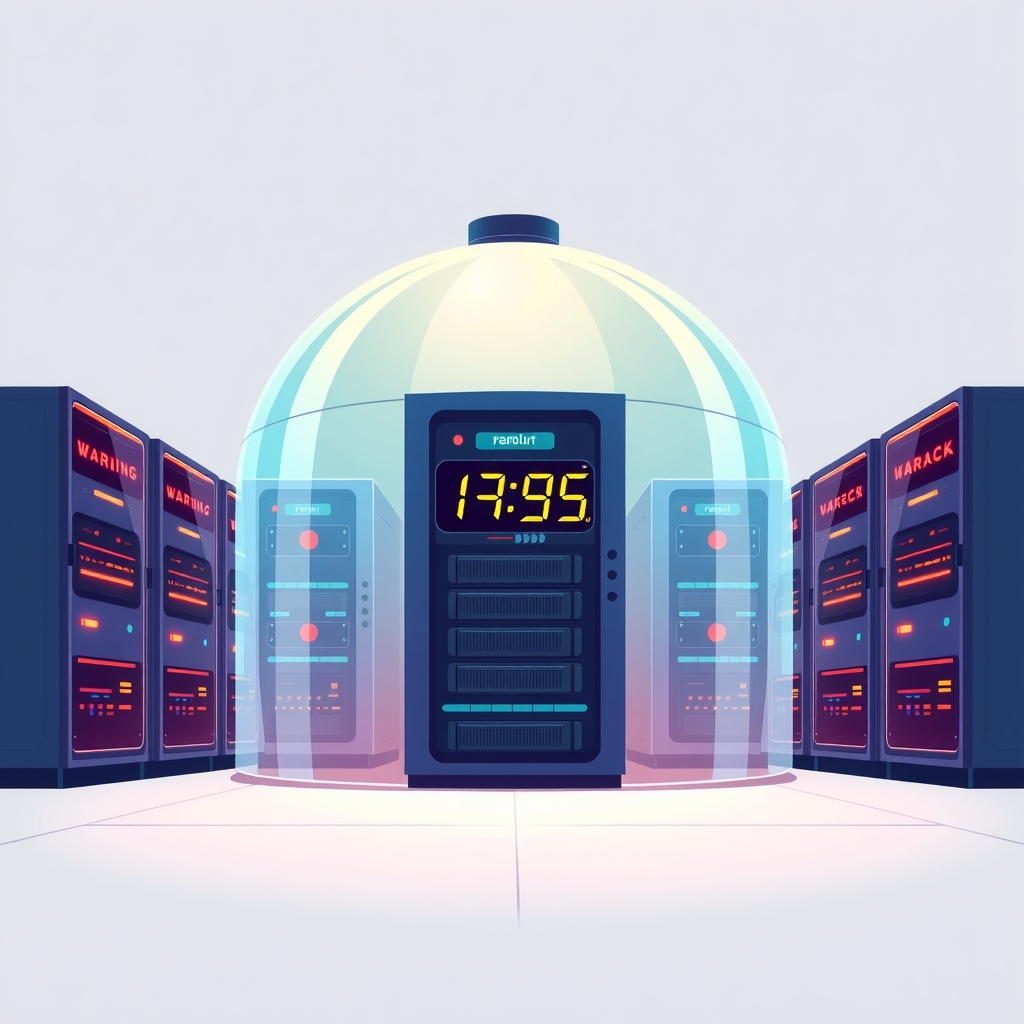
Government websites and public services across Europe went offline this week as organizations scrambled to mitigate two critical PHP vulnerabilities. Germany, France, Belgium, and the Netherlands disabled public-facing sites while waiting for patches that did not yet exist for legacy systems. The incident underscores a growing tension between rapid vulnerability discovery and the slow pace of infrastructure modernization.
What happened
The disruptions were caused by CVE-2026-109618 and CVE-2026-109619, collectively known as PHP2Shell. These are remote code execution (RCE) vulnerabilities located within the PHP runtime itself, rather than in specific applications or frameworks. Because the flaw exists at the language level, it affects every PHP version back to 5.4. Attackers can exploit these bugs to execute arbitrary code or expose sensitive data in process memory, such as API keys and authentication tokens, regardless of the application’s own security measures.
The PHP community responded with an unprecedented collaborative effort. The PHP Ecosystem Security Team, the PHP Foundation, and release managers worked alongside long-term support (LTS) vendors like Zend to prepare fixes for all supported versions. However, the coordination was disrupted when CVE numbers were leaked on October 20, forcing the release schedule to move up by a day. By 14:00 UTC on October 21, patches were available for all community-supported PHP versions, but organizations running end-of-life (EOL) versions remained exposed until LTS providers released their own backports.
This event marks a shift in how vulnerabilities are discovered and disclosed. Researchers used advanced AI models to identify the flaws, part of a broader initiative to find critical open-source weaknesses. While this accelerates the identification of bugs, it also compresses the window between discovery, disclosure, and exploitation. For teams managing self-hosted software, the traditional timeline for testing and deploying patches is no longer sufficient when AI can generate exploits faster than humans can verify them.
Key details
- Vulnerability scope: CVE-2026-109618 and CVE-2026-109619 affect all PHP versions from 5.4 onwards, including currently unsupported releases.
- Attack vector: The flaws allow remote code execution via out-of-memory conditions and error handling issues, bypassing application-level authentication.
- Impact: An estimated 40% of PHP users run unsupported versions, leaving them vulnerable without immediate access to official community patches.
- Response timeline: Patches for supported versions were released on October 21, 2026, after CVE details were leaked a day prior.
- AI involvement: The vulnerabilities were identified using AI tools, signaling a future where vulnerability discovery scales exponentially.
- Mitigation: No workaround exists other than updating the PHP runtime or applying LTS vendor backports.
Background
Remote code execution (RCE) is one of the most severe classes of security vulnerabilities because it allows an attacker to take control of the server hosting the application. In the case of PHP2Shell, the vulnerability resides in the PHP interpreter, the software that processes PHP code. This means that even if a web application has robust input validation and secure coding practices, it cannot prevent the attack because the malicious request is processed by the runtime before the application code ever sees it.
Long-term support (LTS) vendors provide a safety net for organizations that cannot immediately upgrade to the latest software versions. They backport security fixes to older, end-of-life versions, allowing critical systems to remain secure while teams plan complex migrations. However, relying on LTS is a temporary bridge, not a permanent solution, especially as the volume of discovered vulnerabilities increases.
Why it matters
For teams that run their own software, PHP2Shell demonstrates that application security is no longer just about writing clean code. It is about maintaining the underlying runtime environment. If you are running an unsupported version of PHP, Python, Node.js, or any other core dependency, you are exposed to risks that your application logic cannot mitigate. The fact that 40% of PHP users are on unsupported versions suggests a significant portion of the self-hosted ecosystem is operating with unmanageable risk.
The acceleration of vulnerability discovery by AI changes the economics of security maintenance. Previously, teams might have had weeks or months to test and deploy patches for critical bugs. Now, the window is shrinking. The leak of CVE numbers before the official patch release shows that secrecy is fragile. Teams must assume that once a vulnerability is known to researchers, it may soon be known to attackers. This makes automated monitoring and rapid deployment pipelines essential for survival.
Furthermore, the reliance on LTS vendors highlights a strategic decision point. Organizations must decide whether to invest in continuous modernization or pay for extended support. As AI makes finding bugs cheaper and faster, the cost of staying on legacy software will rise, both in terms of vendor fees and the operational burden of emergency patching.
What you can do
- Audit your runtime versions: Identify all servers running PHP 8.1 or older, as well as other end-of-life dependencies like old Node.js or Python versions.
- Apply patches immediately: Update to the latest supported PHP version or apply the specific backports provided by your LTS vendor if upgrading is not immediately possible.
- Implement heartbeat monitoring: Use automated checks to ensure critical maintenance jobs, such as security scans and backup verifications, are running on schedule.
- Review LTS contracts: Evaluate whether your current long-term support agreements cover the speed of response required for AI-accelerated threat landscapes.
- Automate dependency updates: Integrate tools that automatically detect and propose updates for outdated libraries and runtimes into your CI/CD pipeline.
- Test incident response: Conduct drills to measure how quickly your team can deploy a critical runtime patch across your infrastructure.