DuckDB 2.0 adds server mode, async I/O and variant type support
DuckDB 2.0.0 LTS introduces client-server capabilities via the Quack protocol, asynchronous I/O for faster remote reads, and a first-class VARIANT type for semi-structured data.
The DuckDB team has released version 2.0.0 LTS, codenamed “Cinnamon Teal,” marking a significant shift from pure stability to major feature expansion. This update, published on October 21, 2026, introduces native server capabilities, asynchronous input/output operations, and enhanced handling of semi-structured data. It represents the largest feature release in the project’s history, built upon nearly 20,000 commits since version 1.5.
What happened
DuckDB has traditionally operated as an in-process database, meaning it runs within the same memory space as the application using it. Version 2.0 changes this architecture by polishing the Quack protocol, which allows DuckDB to function in a traditional client-server setup. The new CONNECT statement enables users to attach and switch to remote databases in a single command, improving ergonomics for distributed workflows. While the server defaults to listening only on localhost for security, it can be placed behind a TLS-terminating reverse proxy to accept external connections safely.
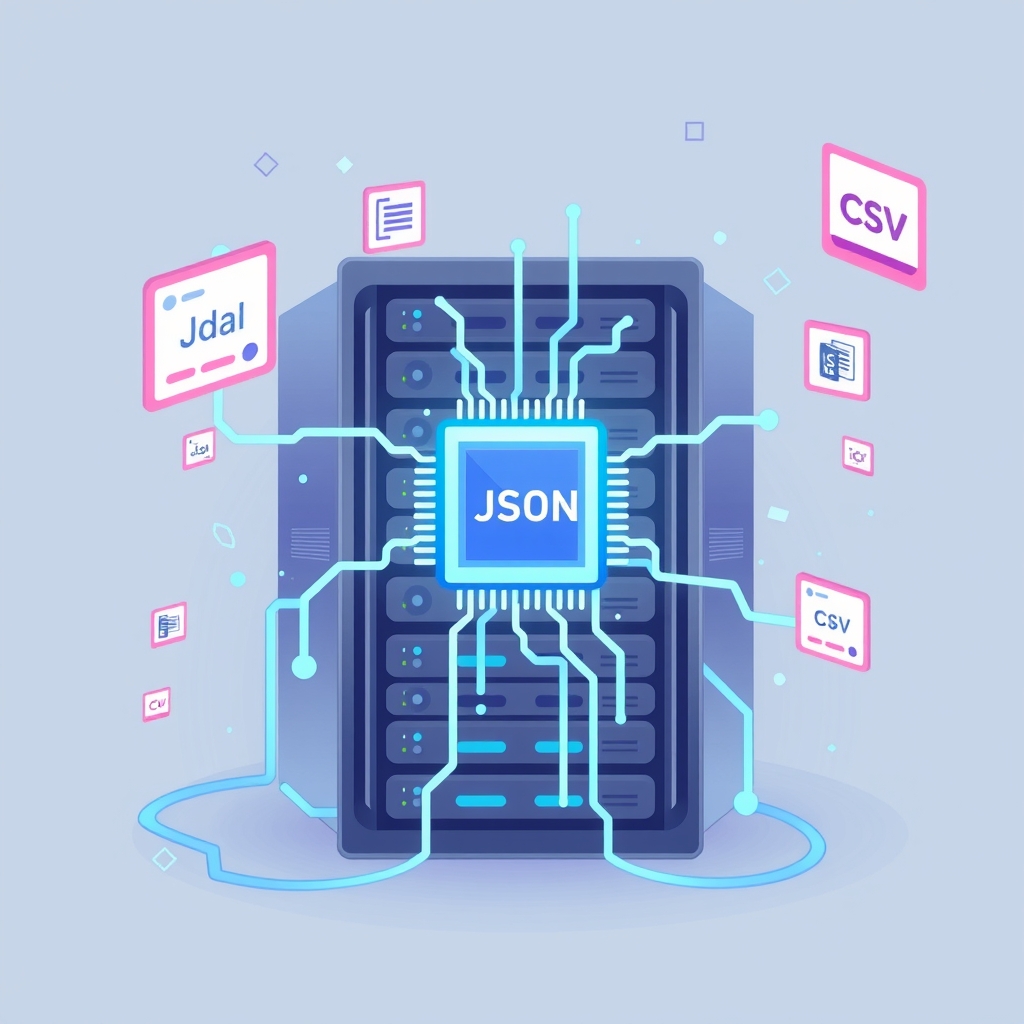
Performance improvements are central to this release, particularly through the introduction of asynchronous I/O. This feature allows the I/O layer to scale independently from query processing, issuing reads in the background and keeping multiple requests in flight. This change significantly boosts parallelism for remote reads, resulting in dramatically faster queries when accessing object storage services like Amazon S3. Additionally, the VARIANT type, introduced in version 1.5, is now fully integrated as a first-class citizen. It stores schema-less data such as JSON while maintaining columnar execution performance, automatically detecting common structures to optimize compression and speed.
The release also includes substantial updates to extensibility and SQL features. A new PEG-based parser replaces the legacy PostgreSQL-derived parser, allowing extensions to hook into the grammar itself and providing more precise error messages. Triggers are now supported, enabling automatic actions like audit logging or maintaining materialized views incrementally. Furthermore, users can now host their own trusted extension repositories, allowing organizations to sign and distribute custom extensions securely within their infrastructure.
Key details
- Long-Term Support: DuckDB 2.0 is an LTS release supported until at least October 2027, while version 1.5 support has been extended to March 2027 to facilitate migration.
- Agent Mode: The CLI detects coding agents like Claude Code or Cursor and switches to a compact output mode, reducing token usage by 59% in tests.
- Async I/O: Asynchronous reading for Parquet, CSV, and native formats improves throughput for remote data sources by decoupling I/O from query execution.
- VARIANT Type: Fully integrated support for semi-structured data allows efficient storage and querying of JSON-like structures without text-format overhead.
- Custom Repositories: Organizations can register and host their own extension repositories with RSA-signed packages for secure internal distribution.
- Breaking Changes: Database files created by version 2.0 cannot be read by older versions, though 2.0 can still read files from previous releases.
Background
For teams unfamiliar with the shift, moving from an in-process database to a client-server model involves separating the database engine from the application logic. In an in-process setup, the database library runs directly inside the application’s memory, which simplifies deployment but limits concurrent access. The new Quack protocol enables DuckDB to listen for connections over a network, allowing multiple clients to query the same data simultaneously. This mirrors the architecture of traditional systems like PostgreSQL but retains DuckDB’s analytical performance characteristics.
Asynchronous I/O is a technique where data reading operations do not block the main processing thread. Instead, the system issues read requests and continues other work while waiting for data to arrive from disk or network storage. This is particularly critical for cloud-native environments where data often resides in object storage rather than local disks. By keeping multiple read requests in flight, the database can utilize available bandwidth more effectively, reducing the time spent waiting for data retrieval during complex analytical queries.
Why it matters
For engineering teams running self-hosted analytics platforms, the ability to deploy DuckDB as a server opens new architectural possibilities. It allows for centralized data serving without migrating to heavier, more complex database systems. The improved ergonomics of the CONNECT statement simplify the management of remote data sources, making it easier to build federated query systems that pull data from PostgreSQL, MySQL, or other DuckDB instances. This reduces the need for complex ETL pipelines when real-time access to distributed data is required.
The performance gains from asynchronous I/O directly impact cost and efficiency for companies storing large datasets in cloud object storage. Faster query times mean less compute time consumed per analysis, which can lead to significant savings in cloud infrastructure bills. Additionally, the first-class support for the VARIANT type addresses a common pain point in modern data engineering: handling semi-structured log data or API responses. By treating this data efficiently within the columnar store, teams can avoid the performance penalty of parsing JSON strings at query time.
Operational security and control are enhanced by the ability to host private extension repositories. Organizations that develop custom internal tools or sensitive data connectors can now distribute them with the same ease and security as official extensions. This ensures that only verified code runs in production environments, mitigating supply chain risks associated with third-party plugins. The extended support timeline for version 1.5 also provides a safe window for teams to test and validate their migrations without immediate pressure.
What you can do
- Test the new version in a shadow system before upgrading production environments to identify any compatibility issues with existing database files.
- Evaluate the Quack protocol for use cases requiring concurrent access to DuckDB data from multiple applications or services.
- Benchmark query performance on remote object storage to measure the impact of asynchronous I/O on your specific workloads.
- Refactor JSON handling logic to leverage the
VARIANTtype for improved compression and query speed on semi-structured data. - Set up a private extension repository if your team maintains custom DuckDB extensions, ensuring they are signed and verified.
- Review the migration guide for breaking changes, particularly regarding storage format compatibility and parser behavior differences.