Separating heartbeat monitoring from job logic for safer rollbacks
A technical guide explains why scheduled jobs need external heartbeat monitors to detect silent failures and ensure safe rollbacks during deployment.
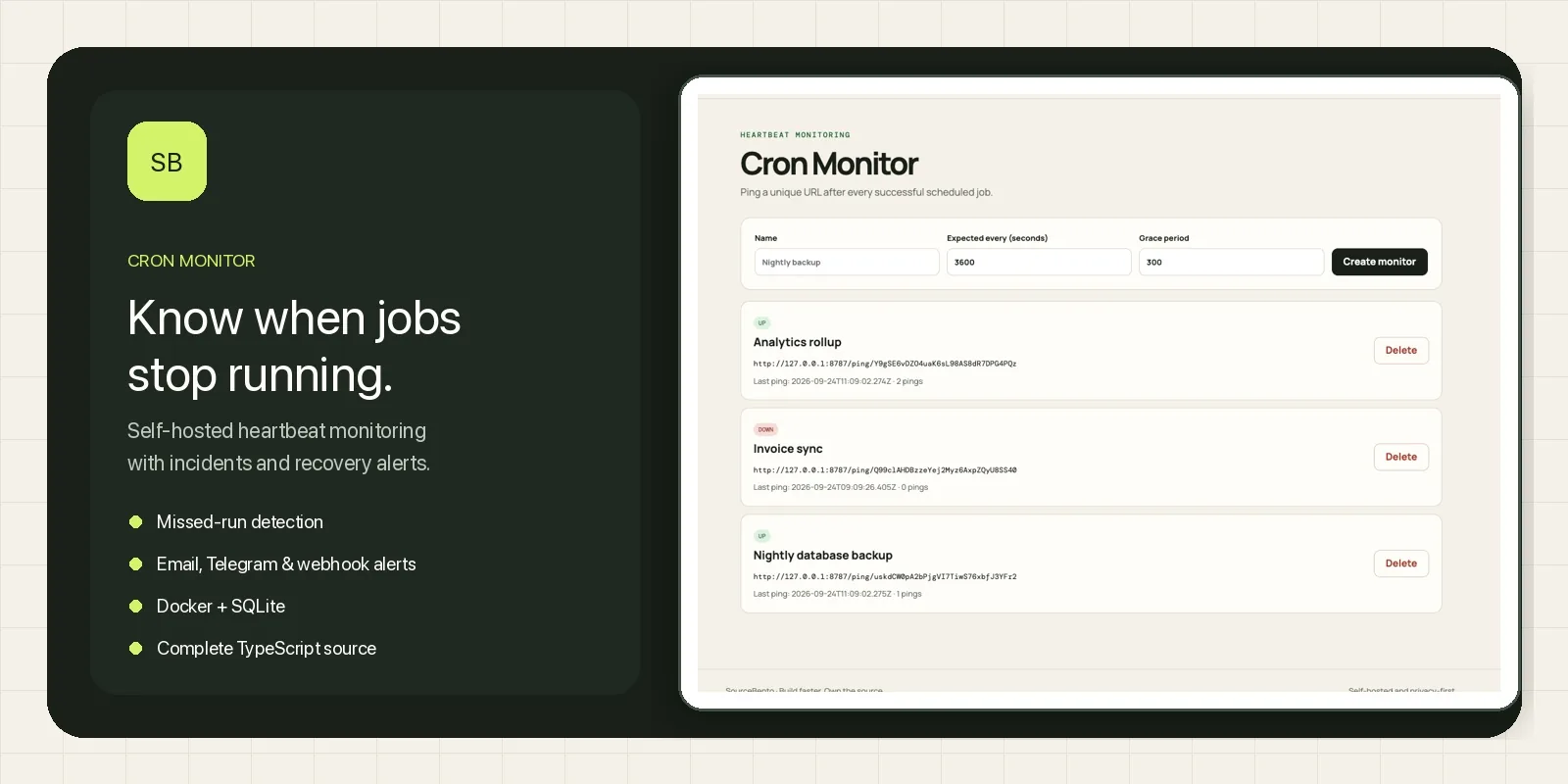
A recent technical guide published on October 3, 2026, outlines a strategy for monitoring Node.js scheduled jobs using external heartbeat services. The author argues that relying solely on internal logs or metrics creates blind spots when a scheduler fails to launch a task entirely. By decoupling the liveness signal from the business logic, teams can detect silent failures and perform safer rollbacks.
What happened
The article details a specific architectural pattern for a nightly media pipeline. The core problem addressed is that traditional logging cannot prove a job never started. If a container fails to initialize or a cron schedule is accidentally removed, no error log is generated. To solve this, the author proposes using a dedicated heartbeat monitor that expects a ping only after the job successfully commits its data.
The implementation requires the job to send a request to a unique URL provided by an external monitoring service. This request must occur at the very end of the execution flow, ensuring that partial successes do not register as complete. The author emphasizes that the heartbeat deadline must exist outside the scheduled process itself. If the same system decides whether it is late and reports the answer, a missed invocation results in total silence.
Crucially, the guide warns against placing provider availability checks inside the job’s critical path. Validating external dependencies during every nightly execution couples the pipeline’s success to third-party uptime. Instead, the author suggests running readiness checks during deployment. This keeps the nightly job focused on its primary task while ensuring the environment is valid before the schedule begins.
Key details
- Heartbeat pings should only be sent after durable data commits to prevent false positives from partial failures.
- Grace periods for alerts must be set based on observed runtime distribution and scheduler delay, not just the cron schedule time.
- Job writes should be idempotent, keyed by logical periods like publication dates, to handle retries without duplicating media imports.
- Structured logs should include stable fields such as job name, run identifier, outcome, and processed item count for effective searching.
- Deployment sequencing matters: create the heartbeat check first, then deploy the job version, and enable notifications last.
- External observability vendors should be accessed via an application-owned interface to allow easy swapping without changing job code.
Background
Heartbeat monitoring differs from standard error tracking. While error trackers capture exceptions that occur during execution, heartbeat monitors detect absence. They operate on a simple principle: if a specific URL is not visited within a defined window, an incident is raised. This distinction is vital for scheduled tasks where the failure mode is often non-execution rather than crashed execution.
Idempotency in this context means that running the same job multiple times with the same input does not produce duplicate side effects. For a media pipeline, this might mean checking if a file for a specific date already exists before importing it. This safety net allows the scheduler to retry failed heartbeats or network glitches without corrupting the dataset.
Why it matters
For teams running self-hosted software, silent failures are particularly dangerous. A backup job that fails to start due to a configuration error may go unnoticed for weeks until data loss becomes apparent. Internal logs are useless in this scenario because there is no process to generate them. An external heartbeat provides an independent witness that confirms the job actually ran.
This approach also simplifies rollback procedures. When a new version of a job is deployed, it can continue to use the same heartbeat contract as the previous version. If the new code contains a bug, rolling back to the old version does not break the monitoring setup. The monitoring service remains agnostic to the internal implementation, caring only that the signal arrives on time.
Furthermore, separating the monitoring contract from the vendor prevents lock-in. By using a simple HTTP request to a unique URL, teams can switch between monitoring providers like Healthchecks.io, Cronitor, or self-hosted solutions without rewriting their job logic. This flexibility is essential for long-term maintenance and cost management.
What you can do
- Audit existing cron jobs to identify those lacking external liveness checks, especially critical backups and data syncs.
- Implement idempotent writes in scheduled tasks by keying operations on logical identifiers rather than random run IDs.
- Configure heartbeat grace periods to account for typical job duration plus a buffer for scheduler latency.
- Deploy monitoring endpoints before updating job code to ensure continuous coverage during the transition.
- Use structured logging with consistent field names to enable effective post-mortem analysis when incidents occur.
- Test rollback scenarios by simulating a failed heartbeat and verifying that the previous job version still reports correctly.